
How do businesses run a serious energy programme without an internal energy team?
By embedding an external partner that acts as the in-house energy function — owning strategy, engineering, funding and operations under one accountable relationship.
Run a board-grade energy programme without hiring an internal team.
If this is the conversation happening inside your business, you're not alone — and the symptoms below are usually the first sign.
- Energy strategy sits across finance, facilities and sustainability with no owner
- Three quotes received, none of them comparable
- Reliance on suppliers to define what the business should do
- Sustainability commitments outpacing internal capability

The cost of leaving this unsolved.
These aren't theoretical risks. They're the compounding business consequences we see when this challenge is left to sit.
Decisions get made on the wrong inputs
Without internal expertise, the business defaults to whichever vendor explains it best — not whichever answer is right.
Strategy stalls between teams
Energy sits across facilities, finance and sustainability. Without a clear owner, nothing moves at the pace the commitments require.
ESG commitments outpace capability
Board-level promises get made faster than the internal team can plan, fund and deliver against them.
Spend leaks through disconnected projects
Three small installations done well still don't compound. Without a programme view, every project is solving the wrong problem in isolation.
Hire an energy manager.
Most businesses don't need a hire. They need a function.
A single internal hire rarely covers strategy, engineering, funding and operations — and is hard to justify at one or two sites. An embedded external function delivers all four at less cost and faster. A serious energy programme needs strategy, engineering, finance and operations under one accountable owner. Splitting it across three departments and five vendors is what makes the problem unsolvable.
Hire a single energy manager
Embed a full energy function
Let vendors define the strategy
Own the strategy, brief the vendors
Split decisions across departments
One accountable owner end-to-end
Translate energy into engineering language
Translate energy into board language
Make the first deliverable a costed plan, not a quote.
Before any kit is specified, the business needs a board-ready document showing sequence, funding, capacity and risk. If your current partners can't produce that, you don't have a delivery partner — you have a supplier.
A clear path from problem to outcome.
Three deliberate steps, framed around the outcome each one delivers — not the engineering it takes.
- 01
Understand
Embed alongside finance, facilities and ESG to take ownership of the agenda.
- 02
Design
Build a costed, sequenced energy plan in language the board already speaks.
- 03
Deliver & optimise
Engineer, fund and operate the assets under one accountable contract.
What success actually looks like.
Technology benefits are easy to list. Business outcomes are what the board signs off against.
Energy decisions slip between functions. Vendor pitches drive strategy. ESG commitments sit ahead of the plan to deliver them.
There is one accountable energy function inside the business. Decisions land as NPV, IRR and risk. Strategy, engineering, funding and operations are one conversation, not five.
We've done this before.
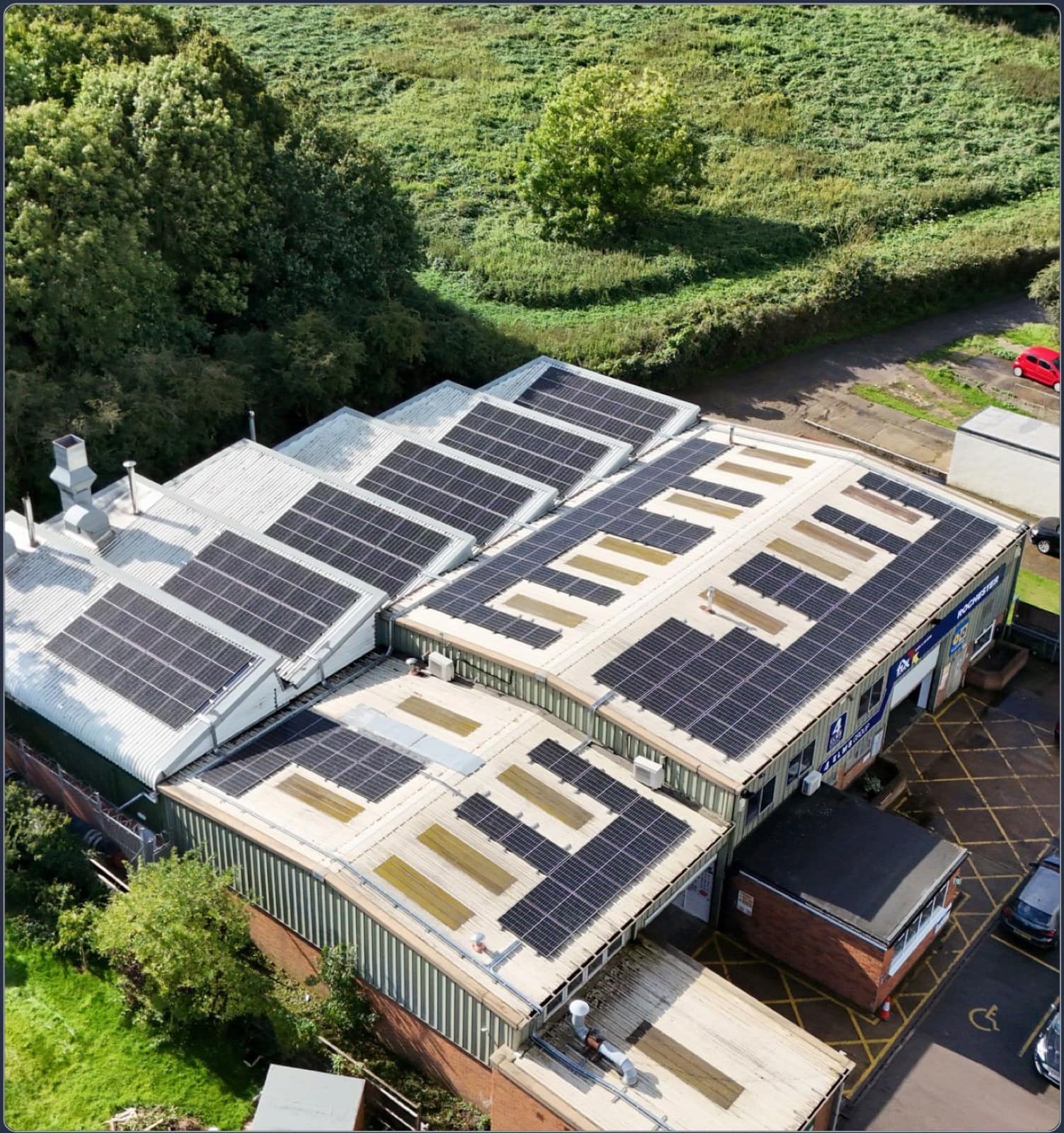
Four Elms Group
Run a board-grade energy programme without hiring an internal team.
Solar PV across a UK network of automotive repair and accident management centres.
117.45 kWp system size · £33,632 year-1 savings
"Thanks to the support of the knowledgeable team at Nuvolt, this initiative has positioned us as leaders in sustainability within our industry. We now generate our own energy, enhancing our resilience from the grid and fu…"Read the case study
A short way to check whether this is your conversation.
If three or more of the below apply, a strategy conversation is almost always worth the time.
Let's have a strategic conversation about your energy position.
An assessment, a benchmark, a roadmap — whichever is most useful. A short conversation with engineers who run commercial energy every day, not a sales call.